The Power Perspective: Understanding 1000W to 10000W in Electric Micromobility
Introduction: The Wattage Revolution
The electric revolution has transformed urban transportation, bringing with it a new vocabulary of watts, volts, and amp-hours. As consumers navigate this landscape, one question consistently emerges: "How much power do I really need?" From the modest 1000W e-bike to the astonishing 10000W electric scooter, power ratings tell a story about capability, speed, and riding experience. This comprehensive guide will demystify these numbers, helping you understand what different wattage levels truly mean for your ride.
Decoding the Basics: Watts, Volts, and Real-World Performance
Before diving into specific power categories, let's establish a fundamental understanding. The wattage rating of an electric motor represents its potential power output, but actual performance depends on several interconnected factors:
Watts (W): A measure of power, calculated as Volts × Amps. Higher watts generally mean more power available for acceleration and hill climbing.
Voltage (V): Electrical pressure that determines how efficiently power is delivered. Higher voltage systems typically allow for higher top speeds.
Amp-Hours (Ah): Battery capacity that determines how long you can sustain power output.
Real-World Factors: Rider weight, terrain, wind resistance, and controller programming all dramatically affect actual performance.
With this foundation, let's explore the specific questions that dominate micromobility discussions.
1000W Best Point: Multi functionality of Urban Transportation
What is the power of a 1000W electric bicycle?
This level of strength has changed the riding experience:
Acceleration and hill climbing: The 1000W motor provides enormous torque, allowing the vehicle to accelerate smoothly from a parking spot and climb hills with great force. Unlike low-power electric bicycles, on slopes of up to 15-20%, you don't need to pedal with great effort.
Speed capability: Although speed is limited to 20-28 mph (32-45 km/h) according to local laws, a 1000W motor can maintain these speeds even in heavy riders or against wind conditions.
Comparison Context: To visualize this power level, consider that a healthy cyclist can sustain about 200-300W of output. A 1000W motor provides approximately 3-5 times that assistance, essentially turning every rider into a Tour de France contender while the motor is engaged.
The 1000W Electric Moped: Urban Efficiency Redefined
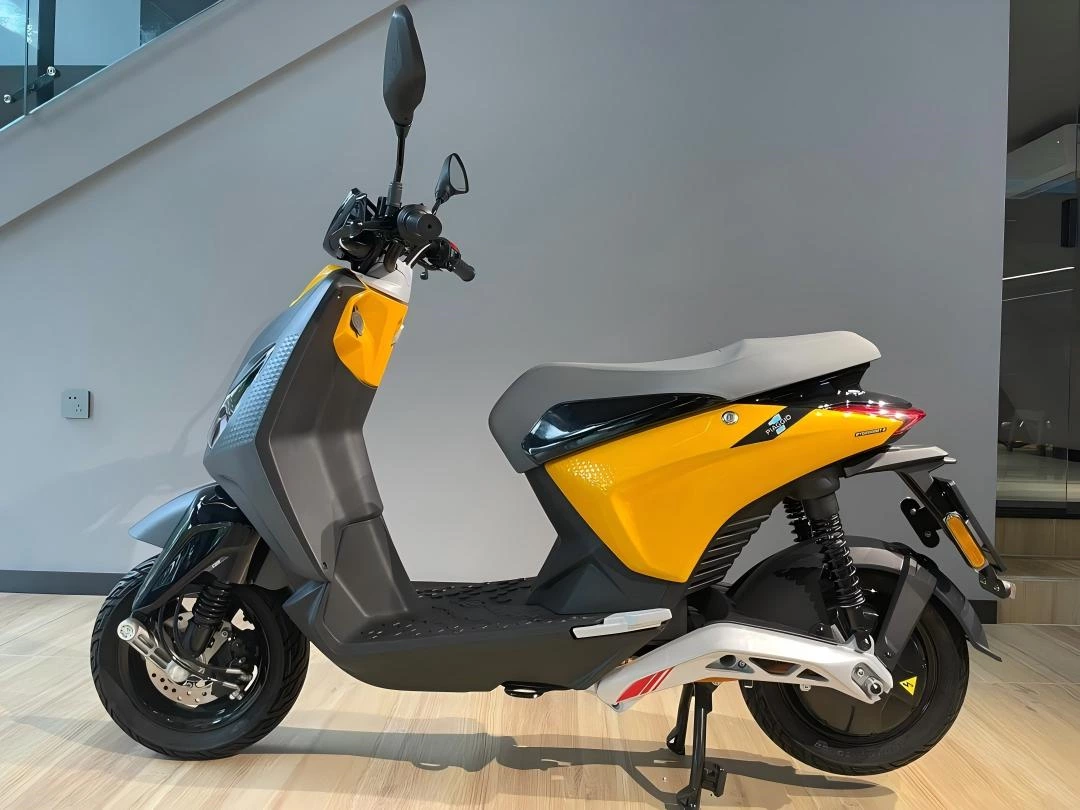
Is 1000W Good for a Scooter?
For electric mopeds and scooters, 1000W represents an excellent balance of efficiency and capability. Unlike e-bikes, scooters typically don't require pedaling, so the motor must handle all propulsion.
Urban Performance: A 1000W scooter accelerates briskly from 0-20 mph (0-32 km/h), keeping pace with city traffic. It can handle moderate inclines without significant speed loss, making it suitable for most urban terrain.
Range Efficiency: At this power level, scooters can achieve 25-45 miles (40-72 km) of range depending on battery size, riding style, and conditions.
Practical Suitability: This is an ideal power range for daily commuters, college students, and urban dwellers. It's powerful enough for practical use while remaining energy-efficient and often falling within legal limits for electric mopeds (which vary by location).
The Extreme End: Understanding High-Power Systems
How Fast Does a 10000W Electric Scooter Go?
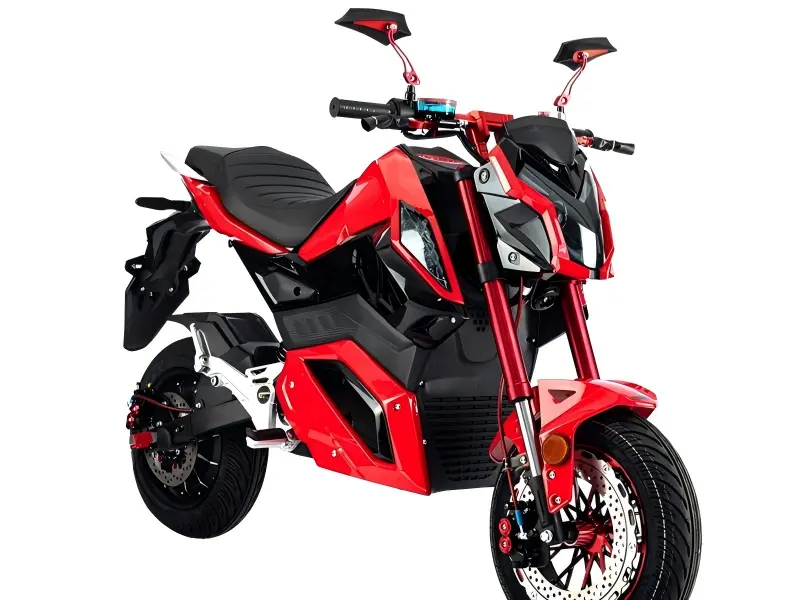
The 10000W electric scooter exists in a different category altogether—these are performance machines that blur the line between scooters and electric motorcycles.
Performance Characteristics: A true 10000W scooter delivers astonishing acceleration, often reaching 0-30 mph (0-48 km/h) in under 2 seconds. Top speeds typically range from 60-80+ mph (97-129+ km/h), with some customized models exceeding 100 mph (161 km/h).
Technical Requirements: Such power demands robust components: high-voltage battery systems (often 72V or higher), heavy-duty controllers, reinforced frames, and high-performance brakes. These are not typical consumer scooters but specialized machines.
Practical Considerations: At these speeds, full motorcycle gear becomes essential for safety. Most jurisdictions require registration, insurance, and a motorcycle license to operate such vehicles legally on public roads.
Use Case: These extreme scooters appeal to performance enthusiasts, those using them on private property, or in regions with lenient regulations. They demonstrate the theoretical potential of electric micromobility but represent a tiny fraction of practical urban transportation solutions.
The Voltage Factor: Speed Beyond Wattage
How Fast is 1000W 72V in MPH?
This excellent question highlights why wattage alone doesn't tell the whole story. A 1000W motor operating at 72V behaves differently than one operating at 48V or 36V.
The Voltage-Speed Relationship: Higher voltage systems can achieve higher rotational speeds (RPM) for the same power rating. A 1000W 72V system typically achieves higher top speeds than a 1000W 48V system, though with potentially less torque at low speeds.
Estimated Performance: A well-designed 1000W 72V electric scooter or light electric motorcycle can reach 35-45 mph (56-72 km/h) under optimal conditions. The actual speed depends on multiple factors:
-
Motor efficiency and winding configuration
-
Controller programming and current limits
-
Rider weight and aerodynamics
-
Tire size and gearing (if applicable)
Efficiency Advantage: The higher voltage system operates at lower current for the same power (Amps = Watts/Volts). Lower current means less heat loss in the wiring and potentially greater efficiency, especially at higher speeds.
Real-World Example: Compare two 1000W scooters—one 48V and one 72V. The 48V version might excel at quick acceleration and hill climbing (higher current = more torque), while the 72V version would likely achieve a higher top speed and maintain speed better on flat terrain.
参考知识
380/1000
机翻 · 通用领域
Practical power spectrum: from 250W to 10000W+
To view these numbers correctly, the following is how different power levels can be translated into practical use:
250-500W: entry-level electric bicycles and scooters. Suitable for flat terrain, lightweight riders, and auxiliary pedal assistance. Speed: 15-20mph (24-32km/h).
750W: The maximum power of electric bicycles commonly seen in many states in the United States. Suitable for cycling in most cities with moderate slopes. Speed: 20-28mph (32-45km/h).
1000W: Our focus - very suitable for heavy-duty riders, freight, and hilly cities. The best choice for light motorcycles. Speed: 25-35 miles per hour (40-56 kilometers per hour), high-pressure system can reach up to 45 miles per hour.
1500-3000W: Light electric motorcycles and high-performance scooters. Can approach or exceed 50 miles per hour (80 kilometers per hour). Usually requires permission.
5000-10000W+: High performance electric motorcycle. The performance of a sports bike is equivalent to its acceleration performance, usually surpassing gasoline cars in the same class.
Safe and legal cycling
Legal considerations: Most countries and regions have specific classifications based on power, speed, and the presence of pedals. According to local laws, vehicles with a capacity of 1000W may be classified as bicycles, light motorcycles, or motorcycles.
Safety device: The minimum protective equipment should be commensurate with the potential speed. At a speed of 1000W (25-35+miles per hour), a bicycle helmet is not enough. It is recommended to wear a full face helmet, armored jacket, gloves, and suitable shoes.
Rider skills: Higher strength requires higher riding skills, especially in emergency maneuvers. Consider attending safety courses when driving more powerful vehicles.
Infrastructure compatibility: High speed electric vehicles require appropriate infrastructure. When the vehicle speed exceeds 20-25mph (32-40km/h), the bike lane becomes unsafe and requires the use of regular lanes.
Making Your Power Choice: Key Considerations
When deciding between power levels, ask yourself:
-
Terrain: How steep are your regular routes?
-
Cargo: Will you carry passengers or packages?
-
Distance: What's your typical trip length?
-
Infrastructure: What paths or roads will you use?
-
Legal Framework: What's allowed in your area?
-
Budget: Higher power typically means higher cost.
For most urban dwellers, 1000W represents an ideal balance—enough power for practical needs without excessive speed that creates safety or legal concerns.
The Future of Electric Micromobility Power
Technology continues to evolve in exciting directions:
Motor Efficiency: New motor designs deliver more power with less weight and heat.
Battery Advancements: Higher energy density means more range without increasing power consumption.
Smart Controllers: Adaptive systems that optimize power delivery based on conditions, rider style, and terrain.
Integrated Safety: Systems that use sensors and algorithms to prevent accidents while maximizing performance.
Conclusion: Power as a Tool, Not Just a Number
The journey from 1000W to 10000W represents more than just increasing numbers—it reflects different philosophies of urban mobility. The 1000W moped or e-bike offers a nearly ideal compromise for city living: sufficient power for practical needs, reasonable efficiency, and typically compliant with regulations.
For the vast majority of urban residents, the question shouldn't be "How fast can I go?" but rather "What power best serves my transportation needs while respecting community safety?" In this context, 1000W emerges as a particularly compelling answer—a goldilocks zone of urban electric mobility that balances capability, efficiency, and responsibility.
As you consider your next electric vehicle, look beyond the wattage rating to understand the complete picture of voltage, controller programming, battery capacity, and real-world performance. The right power for you isn't necessarily the highest number, but the one that best matches your needs, your environment, and your riding style.
The electric revolution isn't about raw power—it's about smarter, cleaner, more efficient mobility. And sometimes, 1000 watts is exactly the right amount of revolution.